
Renovate or Build New? How to Decide Which Path Is Right for Your Home
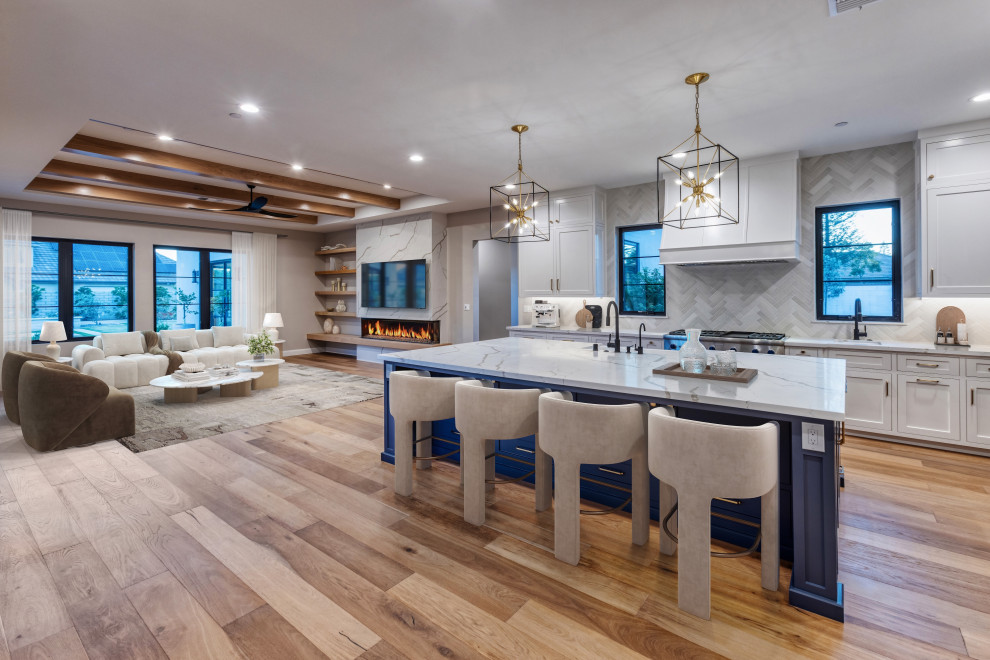
Sometimes the first decision isn’t what to build. It’s whether to transform the home you have or begin again.
For homeowners who already own a property they value, deciding between a large-scale renovation and a new custom home can be complex.
You may love your neighborhood, homesite, mature landscaping or views while recognizing that the home itself no longer reflects how you want to live. Perhaps the floor plan feels dated, important spaces need to be reconsidered, indoor and outdoor living don’t connect well, or you simply need more space.
The question becomes:
Can the existing home become the home you want—or would starting new provide a better path?
There isn’t one answer for every property. The decision begins with understanding the existing home, the site, the extent of the desired transformation and how those factors align with your priorities and investment.
At Sweaney Custom Homes, we believe those questions are best explored before significant design decisions are made.
Start With the Property, Not Just the House
For many homeowners considering a major renovation, the property itself is one of the strongest reasons to stay.
An established neighborhood may offer qualities difficult to recreate with new construction—mature landscaping, larger homesites, golf course frontage, views, proximity to friends and family, or simply a setting you value.
The sentiment is often simple:
We love where we live. We just don’t love the house anymore.
That can be a compelling reason to explore renovation. The property may be the irreplaceable asset. The question is whether the existing home provides a reasonable foundation for the transformation you envision.
Understand What You Already Have
New construction begins with understanding the opportunities and constraints of the property. Renovation adds another layer: the existing building itself.
Structure, foundation and framing, mechanical systems, roof configuration, ceiling heights, floor elevations, architectural character, orientation and opportunities for expansion can all influence what the home can become.
Some conditions may not be fully visible until construction begins. Plans, inspections and exploratory work can reveal a great deal, while thoughtful preconstruction can reduce uncertainty by coordinating engineering, obtaining trade input and identifying areas requiring additional evaluation.
That uncertainty does not make renovation undesirable. It means renovation requires experienced planning, appropriate contingencies and an understanding that some decisions may need to adapt as existing conditions are uncovered.
The goal isn’t to eliminate every unknown. It is to understand as much as practical before major design and construction decisions are made.
When Renovation May Make Sense
A large-scale renovation can be an excellent path when the existing home and property provide a strong foundation for what you ultimately want to create.
You value the location.
The neighborhood, homesite, views, landscaping or surrounding community would be difficult to replace.
The home has qualities worth preserving.
Its proportions, orientation, architectural elements or portions of the structure may contribute meaningfully to a new design.
The desired transformation works with the existing home.
A substantial addition, reconfigured floor plan, new kitchen and primary suite, improved indoor-outdoor living or broader architectural transformation may be achievable while making thoughtful use of the existing structure.
Successful renovation isn’t necessarily about preserving everything possible.
It’s about preserving what has value while rethinking what doesn’t.
When Building New Deserves Consideration
There are also situations where the desired transformation becomes extensive enough that new construction should be evaluated alongside renovation.
The existing structure works against the desired design.
Structural configuration, ceiling heights, floor elevations or roof geometry may make the transformation increasingly complicated.
Nearly every part of the home needs to change.
Extensive structural modifications, new building systems and comprehensive architectural reconfiguration can change the renovation equation.
The existing home compromises the long-term vision.
Renovation shouldn’t become an exercise in repeatedly compromising the home you actually want simply to preserve the structure that happens to be there.
The property has greater potential.
An exceptional homesite may present an opportunity for a fundamentally different residence designed from the beginning around the property, views and the way you want to live.
As more of the existing home must be removed, reconfigured or rebuilt to achieve the desired result, the value of preserving the original structure should be evaluated more carefully.
At some point, the question shifts from:
“Can we renovate this?”
to:
“Is renovation still the best way to create the home we want?”
There isn’t a predetermined point where renovation becomes the wrong choice. The question is how far the existing home is from the home you ultimately want.
Don’t Decide by Cost Per Square Foot Alone
One of the easiest mistakes is comparing renovation and new construction using cost per square foot alone.
Selective demolition, structural modifications, temporary protection, integrating new and existing systems, unforeseen conditions and construction sequencing can all influence renovation costs. At the same time, renovation may preserve portions of a home and property that have substantial value.
The better question is:
Which path makes the best use of the property and your investment to create the home you ultimately want?
That requires looking at the project as a whole—not simply comparing square footage.
Think Beyond the Floor Plan
Architecture is more than room arrangement.
A meaningful transformation should consider natural light, ceiling volume, circulation, indoor-outdoor relationships, architectural continuity and building systems.
The question isn’t simply whether a new floor plan can fit within or around the existing structure. It’s whether the existing home can become a cohesive, intentional expression of the home you want to create.
That standard should apply to the finished renovation as well. New and existing spaces should relate naturally. Materials should transition intentionally. Additions should belong to the architecture.
Ideally, someone experiencing the completed home shouldn’t wonder where the old house ends and the renovation begins.
They should simply experience the home as a cohesive whole.
Why Early Master Builder Involvement Matters
In a traditional approach, a homeowner may substantially develop the design before involving a builder to determine how the project will be constructed and what it may cost.
For a significant renovation, that separation can be particularly challenging because existing conditions, structural requirements, design, constructibility and investment are closely connected.
SCH’s Master Builder-led Design-Build approach brings those considerations together earlier.
The Master Builder helps connect the existing home with the architectural vision, design possibilities with construction realities, and desired scope with investment.
The objective isn’t to allow construction to dictate design.
It’s to give the design better information from the beginning.
If you already have an architect or interior designer, Sweaney Custom Homes can collaborate with the professionals you have selected. What matters most isn’t that every discipline comes from the same company. It’s that they work together around one shared vision.
Sometimes the Right Home Is the One You Already Own
Building new provides the opportunity to create a home from the ground up around the property and the people who will live there.
Large-scale renovation offers a different opportunity: to preserve what may be difficult or impossible to recreate—the homesite, neighborhood, mature landscape, views or history—while transforming the part that can be changed: the home itself.
Neither path is automatically better.
The important thing is understanding the home, property, goals and magnitude of the transformation before committing too far to either direction.
For some homeowners, that confirms the existing home provides an excellent foundation for transformation. For others, it reveals that starting new provides greater freedom to achieve the long-term vision.
Either conclusion is valuable when it is reached early enough.
Not Sure Which Path Is Right for Your Property?
If you’re considering a major renovation or new custom home, Sweaney Custom Homes can help evaluate the existing home, property, desired scope and architectural possibilities before major design decisions are made.
The Return of the Master Builder.
One Vision. One Team. One Accountable Leader.
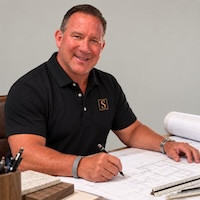
Todd Sweaney
Principal | Master Builder
Sweaney Custom Homes